
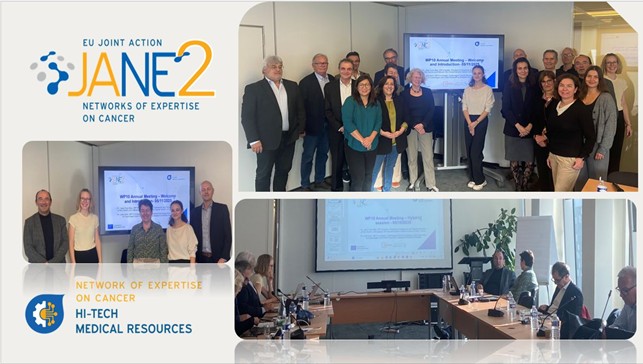
Background
The Joint Action on Networks of Expertise (JANE-2) is a European initiative that aims to strengthen collaboration, knowledge sharing and access to high-quality, specialized cancer care across Europe. Building on the experience of the first JANE Joint Action, JANE-2 brings together European centres of expertise and other stakeholders to help reduce inequalities in access to cancer care. Through its Networks of Expertise, the project focuses on areas where sharing knowledge, experience and common approaches can help improve cancer prevention, diagnosis, treatment and care.
The Networks of Expertise are being established in the fields of:
- Complex and poor prognosis cancer,
- Palliative care,
- Survivorship,
- Primary and secondary prevention,
- Omics technologies,
- High-tech medical resources, and
- Adolescents and young adults.
The Network of Expertise on High-Tech Medical Resources, and in particular the Domain on Physical Methods of Tumour Ablation, focuses on the growing role of minimally invasive and technology-based treatment approaches in oncology. Physical methods of tumour ablation include radiofrequency ablation (RFA), microwave ablation (MWA), cryoablation, laser ablation, high-intensity focused ultrasound (HIFU), irreversible electroporation (IRE), and electrochemotherapy (ECT). These techniques are increasingly used in selected primary and secondary tumours, oligometastatic and oligoprogressive disease, as well as for local tumour control and symptom management.
An important achievement in this area within the JANE-2 project is the recently published Green Paper, “Tumor ablation: emerging uses, challenges, and strategic implementation”, in Radiology and Oncology (doi: 10.2478/raon-2026-0030). The publication provides an overview of current and emerging applications of tumour ablation and discusses both the opportunities and challenges related to their wider use. It also highlights the importance of multidisciplinary decision-making, appropriate patient selection, treatment standardization, education and training, infrastructure, and access to expertise and technology.
Within this broader field, electroporation-based approaches, including IRE and ECT, are an important and developing area of interest. Continued collaboration between European centres can help bring together existing expertise, identify areas where further evidence or experience is needed, and support the appropriate use of these techniques as part of multidisciplinary cancer care.
Aim and Objectives
The aim of our work within JANE-2 is to improve understanding of physical methods of tumour ablation and support their appropriate use in European cancer care.
The objectives are to:
- provide an overview of currently available physical ablation techniques and their clinical applications;
- better understand the role, indications, benefits and limitations of these techniques;
- identify gaps in clinical evidence, technical implementation, training, infrastructure and access;
- encourage collaboration and exchange of knowledge and expertise between European centres;
- contribute to practical, evidence-based recommendations and good practices for patient selection and treatment; and
- identify priorities for future research, innovation and clinical development.
Expected outcomes
The expected outcomes include wider dissemination and use of the JANE-2 Green Paper findings, as well as a better understanding of where physical ablation techniques can contribute to cancer care. The work will also help identify barriers and differences in access of these methods, technology and training across Europe, while encouraging collaboration and knowledge sharing between expert centres. Ultimately, the aim is to support the development of good practices and a more consistent, evidence-based and multidisciplinary approach to the use of physical ablation methods in European cancer care.
Weblink for more information on the project (optional)
Project details
| Principal investigator | Maja Čemažar |
|---|---|
| Role | PI |
| Home institution | The Institute of Oncology Ljubljana |
| Funder | EU4H |
| Start date | 1. 11. 2024 |
| End date | 31. 10. 2028 |
| Participant institutions | all member states Norway |